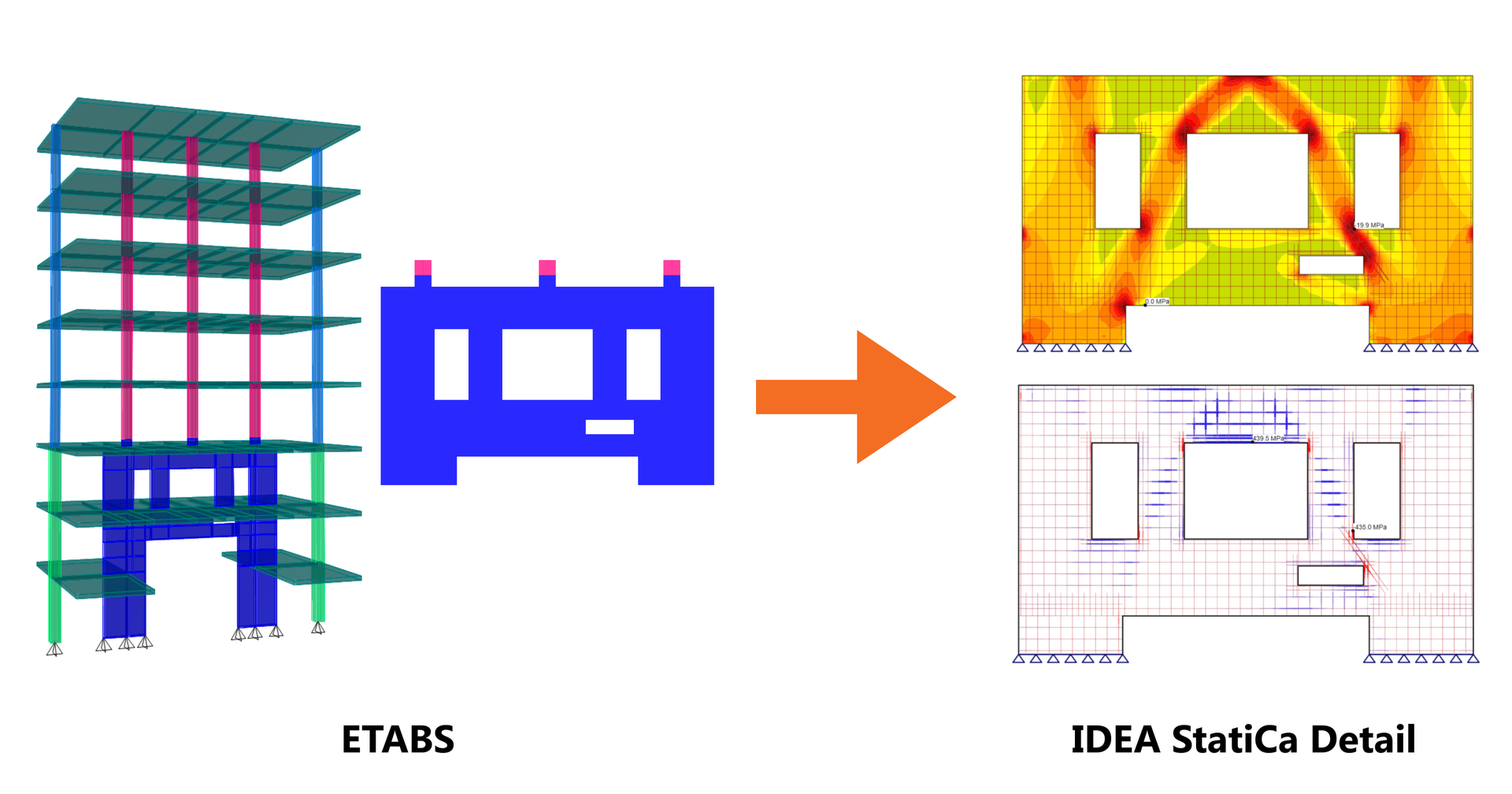
Ontwerp wandliggers eenvoudig met behulp van de ETABS BIM Link
Wandligger
Het ontwerp van wandliggers is een complex onderwerp, omdat deze constructies zich vaak gedragen als D-gebieden, waarbij de aanname van een vlakke doorsnede niet geldig is en de gebruikelijke empirische formules uit de norm niet kunnen worden toegepast. Dit betekent dat de ontwerpfunctie in globale EEM-software, die doorgaans gebruikmaakt van een balk- of kolomontwerpaanname, niet geschikt is voor dit probleem.
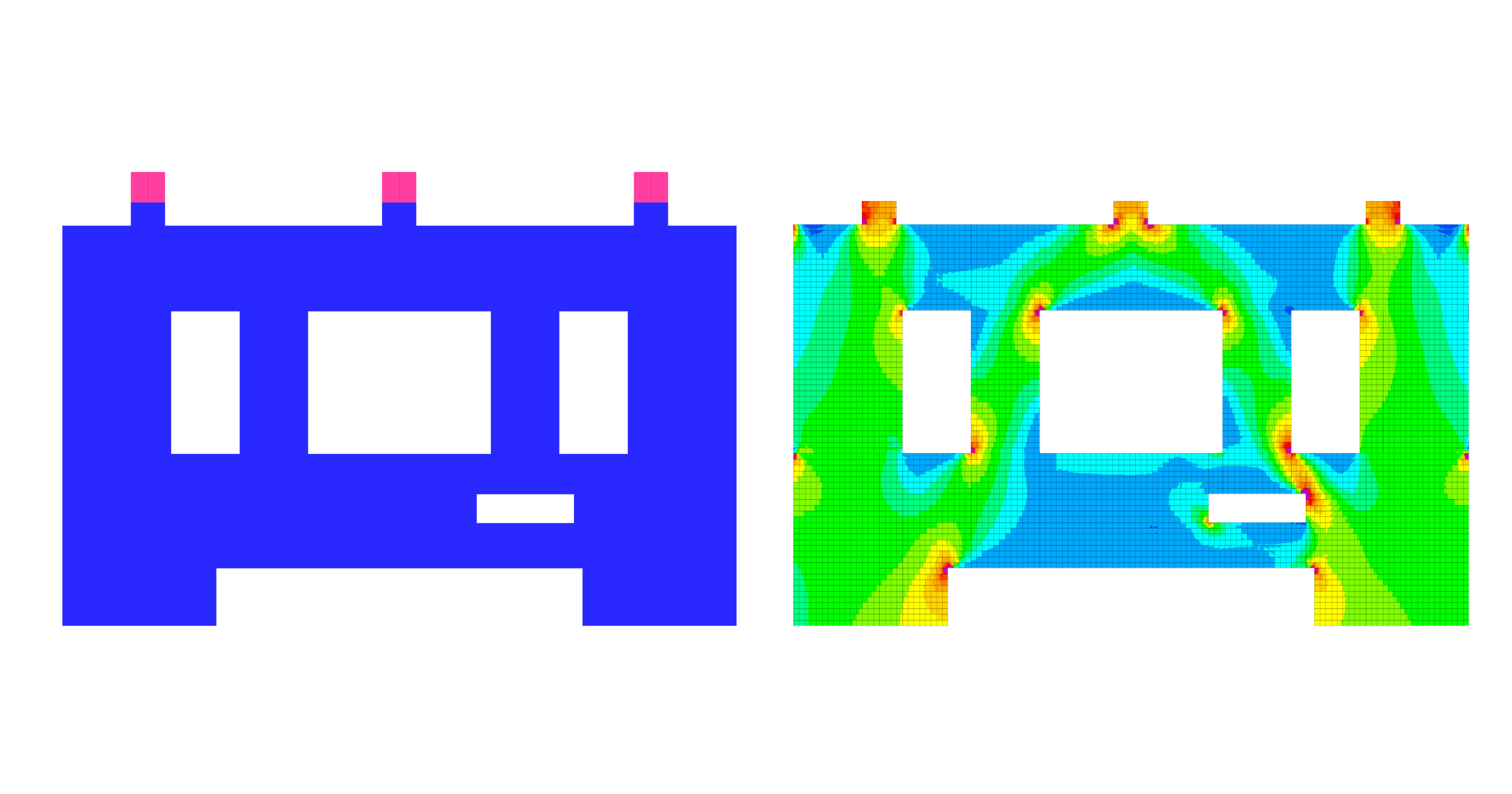
Voor de wandligger hierboven hebben ingenieurs twee opties. De eerste is het gebruik van het Staafwerk-model; hoewel dit een goede en geschikte methode is, vergt het veel handmatig werk en iteraties, wat tijdrovend kan zijn. De tweede optie is het gebruik van een benadering in globale EEM-software door de hoofdtrekspanningen te evalueren om de wapeningsbehoefte te bepalen en te verifiëren dat de hoofddrukspanningen onder de rekenwaarde van de betonsterkte blijven.
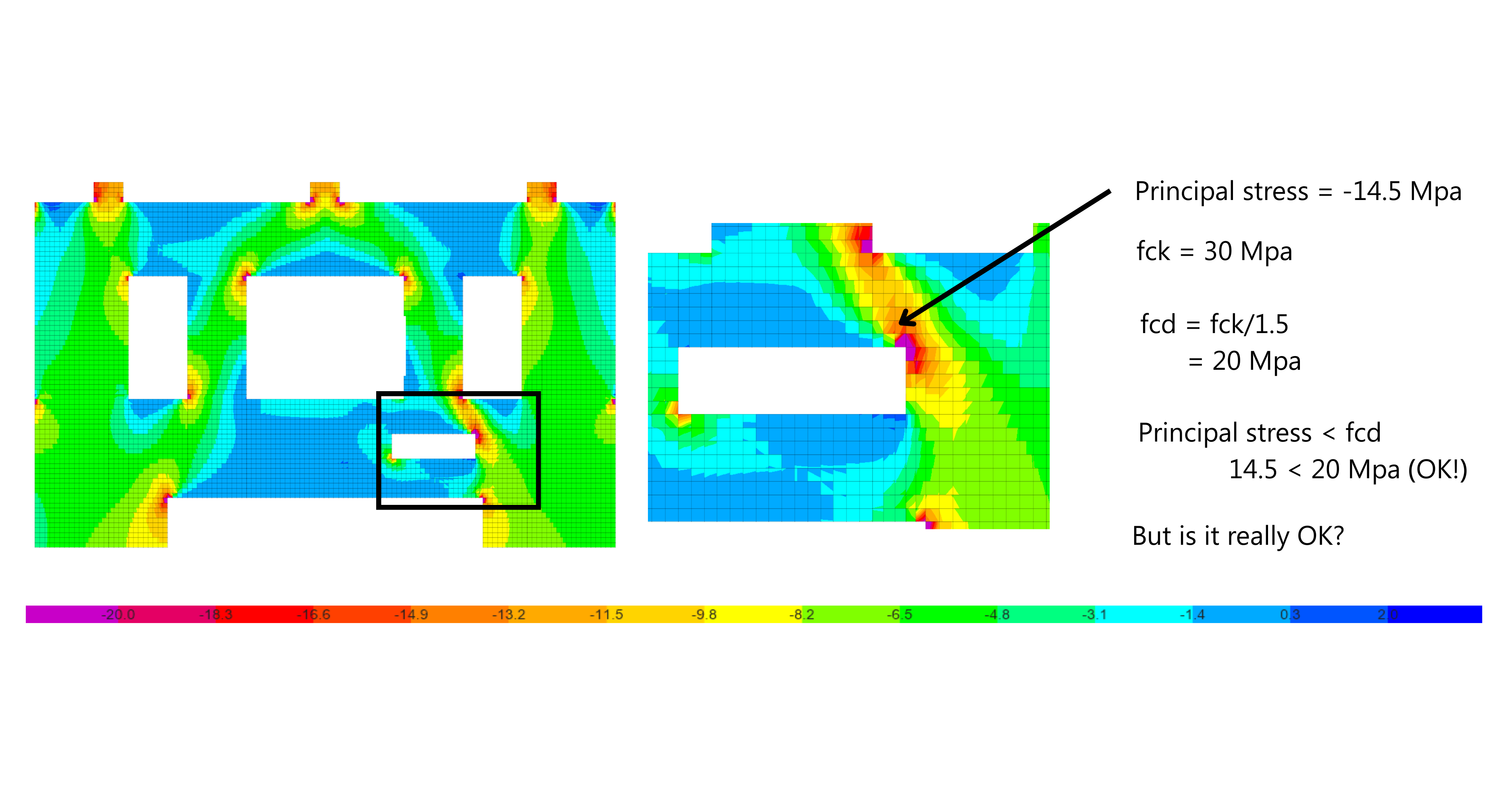
Optie twee lijkt een praktischere en tijdefficiëntere keuze, maar er schuilt een verborgen gevaar in.
Dwarse trek
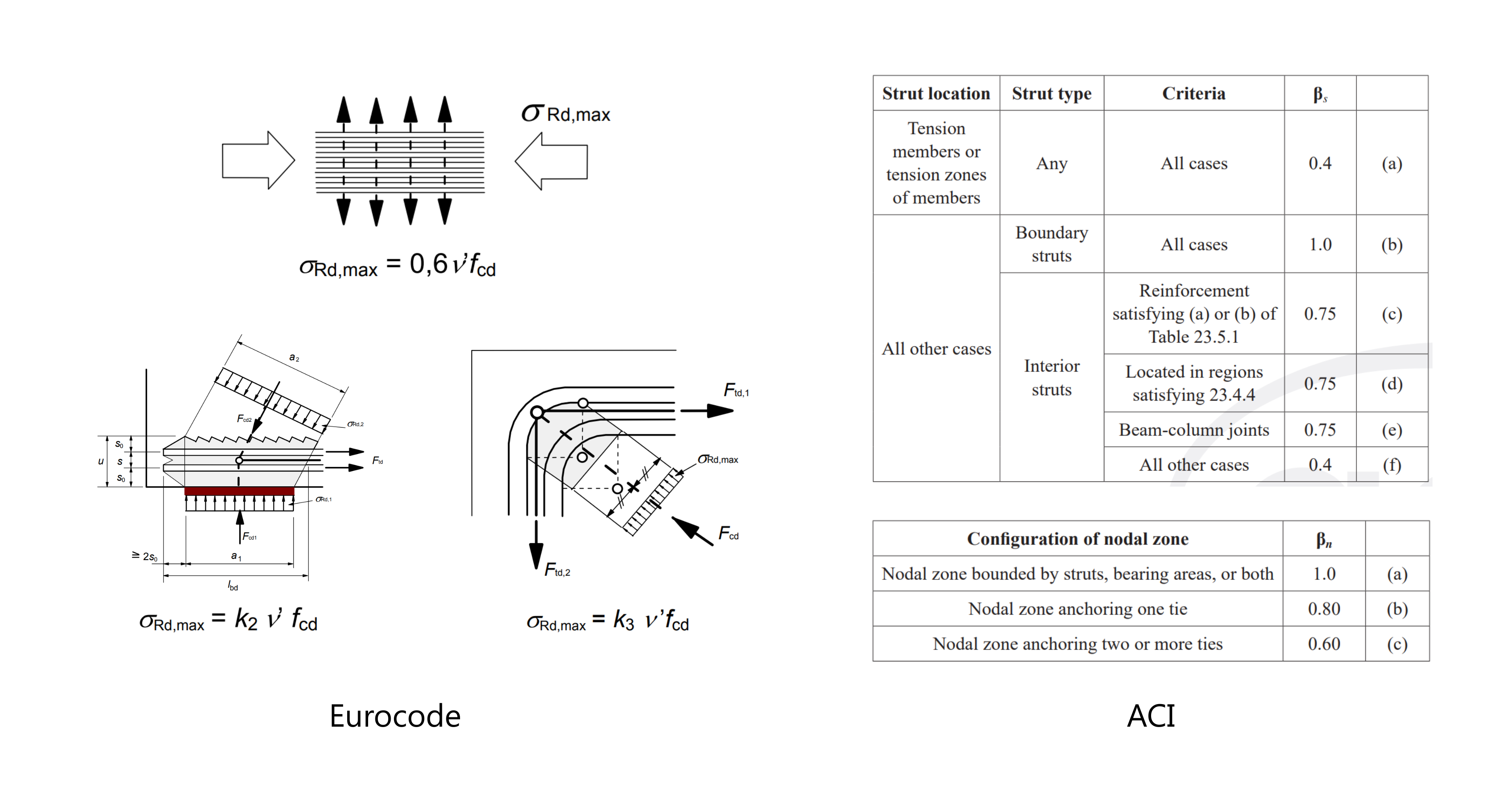
Wanneer beton onder zware druk staat, ontstaan er vaak trekrekken in de loodrechte richting; dit wordt dwarse trek genoemd. Zodra dit optreedt, beginnen er kleine scheuren te vormen en wordt het beton minder omsloten en zwakker in druk. Dit effect, bekend als compression softening, betekent dat gescheurd beton minder druk kracht kan opnemen dan ongescheurd beton. In de norm wordt dit effect meegenomen bij het ontwerp van bijvoorbeeld een gedrongen ligger. Bij drukdiagonalen en knooppunten in gedrongen liggers wordt een factor k in de Eurocode (of β in ACI), met verschillende waarden afhankelijk van de situatie, gebruikt om de maximale druksterkte van het beton te reduceren vanwege het compression softening-effect.
IDEA StatiCa Detail
IDEA StatiCa Detail maakt gebruik van CSFM (Compatible Stress Field Method), waarmee zowel B-gebieden als D-gebieden nauwkeurig kunnen worden behandeld. Detail verwerkt ook compression softening-effecten in de analyse via een kc2-factor, waardoor een realistischere en veiligere beoordeling van de drukdiagonaalcapaciteit wordt verkregen.
IDEA StatiCa 25.1 biedt de import van wandelementen vanuit ETABS naar IDEA StatiCa Detail. Met behulp van deze BIM Link kunnen ingenieurs eenvoudig wandliggers importeren vanuit ETABS voor een grondiger analyse in IDEA StatiCa Detail.
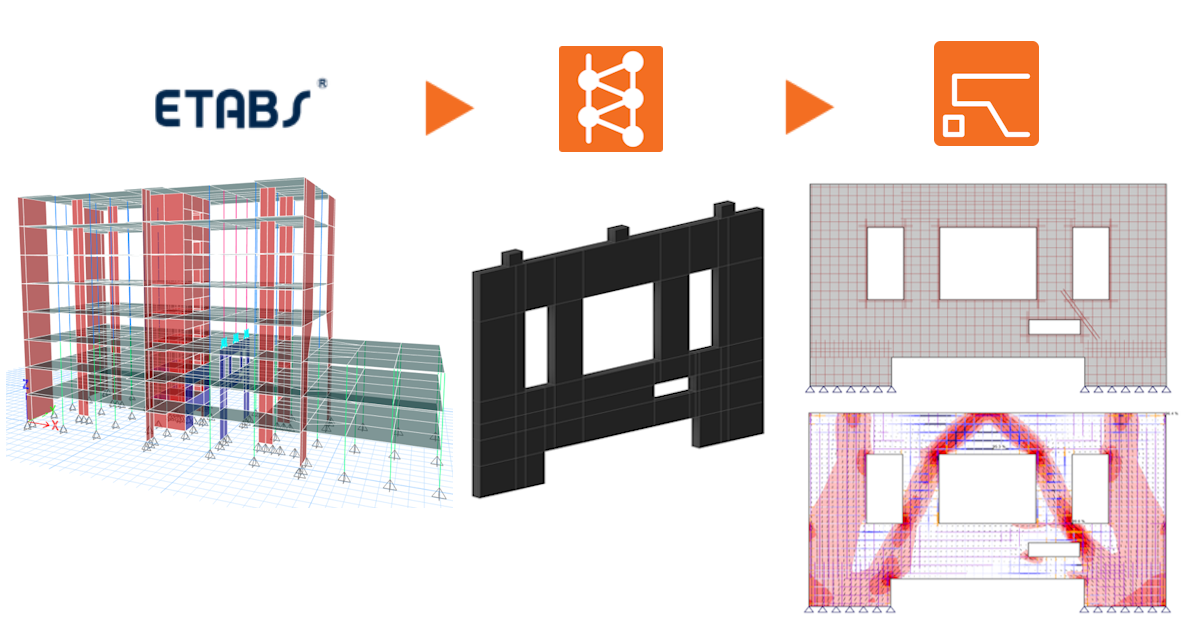
Hieronder is dezelfde wandligger weergegeven, geïmporteerd vanuit ETABS en geanalyseerd in IDEA StatiCa Detail. In de linkerbovenhoek is te zien dat bij de opgegeven basiswapening de UGT-analyse bezwijken aangeeft, ook al zijn de drukspanningen vergelijkbaar (circa 15 MPa). Hoe komt dat?
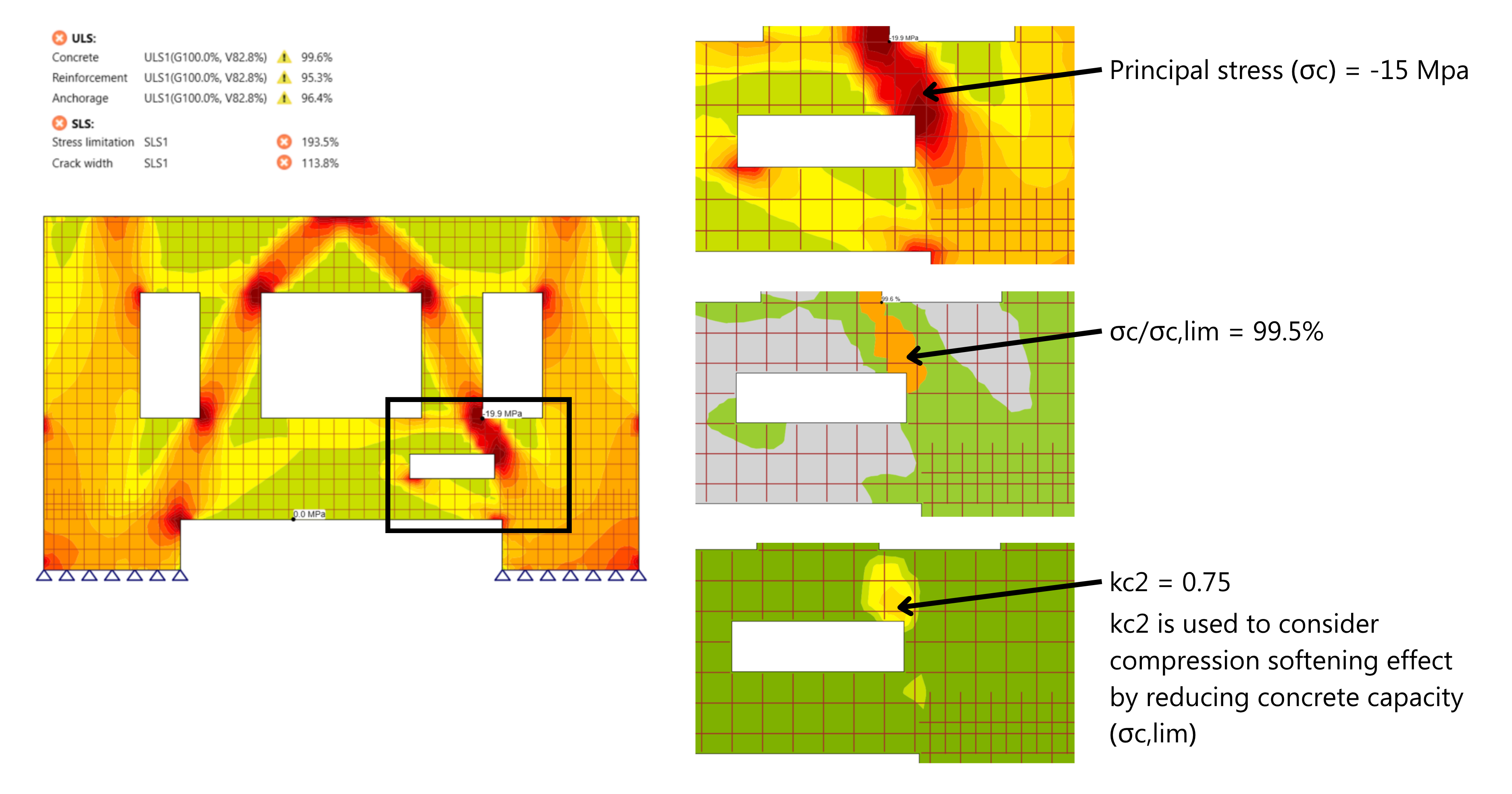
Dit UGT-bezwijken wordt precies veroorzaakt door de meegerekende compression softening via de kc2-factor, die de betoncapaciteit reduceert met een factor 0,75. De betoncapaciteit bedraagt daardoor σc,lim = fcd x k2 = 20 x 0,75 = 15 MPa. Daarom wordt bij een drukspanning van 15 MPa de benuttingsgraad (σc/σc,lim) weergegeven als 99,5%.
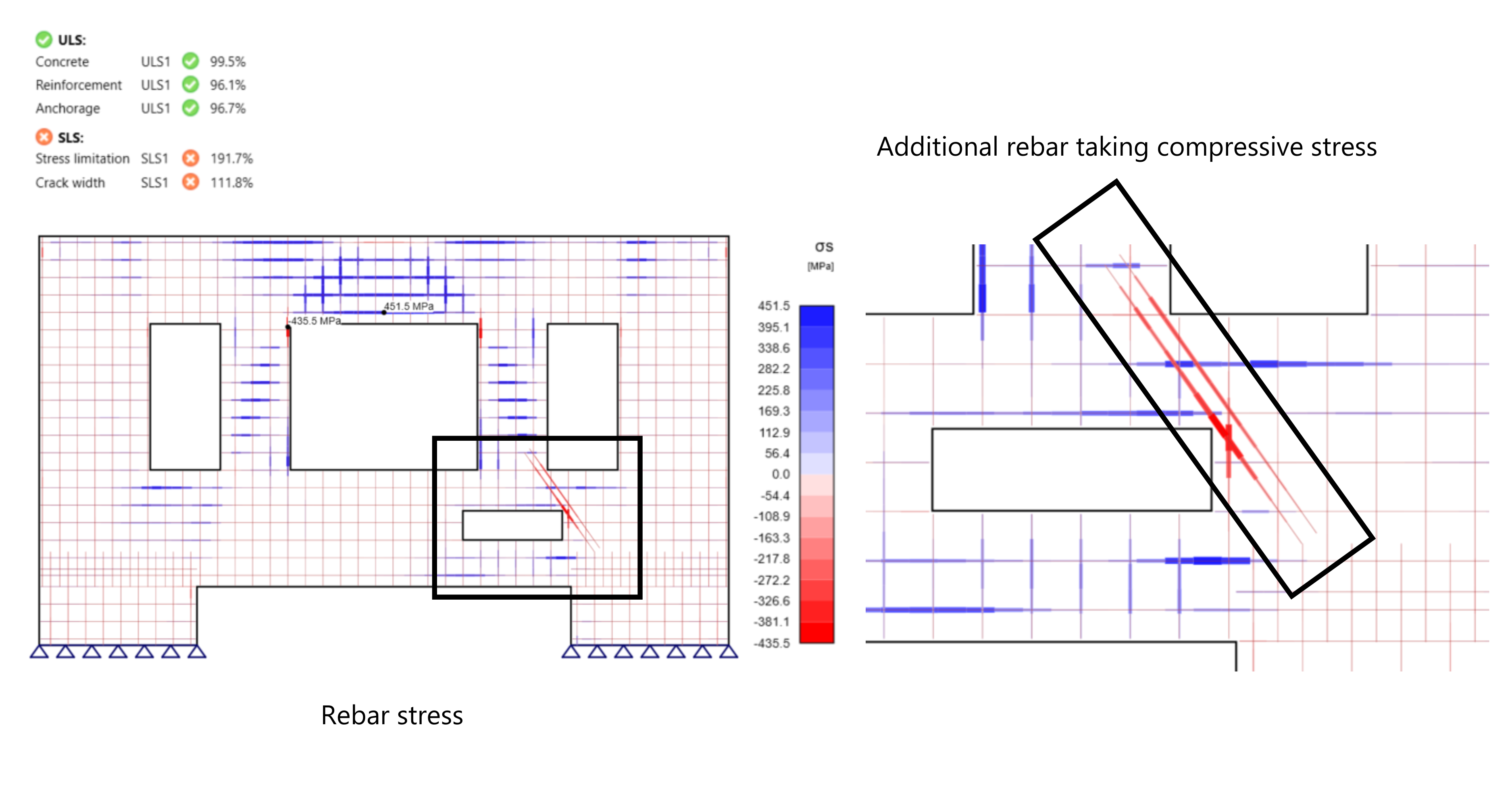
De oplossing is het toevoegen van extra wapening om een deel van de drukspanning van het beton over te nemen. Op deze manier kan de wandligger de normtoetsing doorstaan, zoals hieronder weergegeven. De noodzaak om extra drukwapening toe te voegen zou anders worden gemist als ingenieurs geen gebruik zouden maken van IDEA StatiCa Detail.
Wellicht is het u niet opgevallen, maar in de linkerbovenhoek wordt ook het BGT-resultaat weergegeven, dat de spannigsbegrenzing, doorbuiging (inclusief langetermijneffect) en scheurwijdte omvat, en dit wordt eveneens meegenomen in IDEA StatiCa Detail. Het BGT-resultaat is iets wat de twee hierboven beschreven benaderingen niet kunnen leveren.
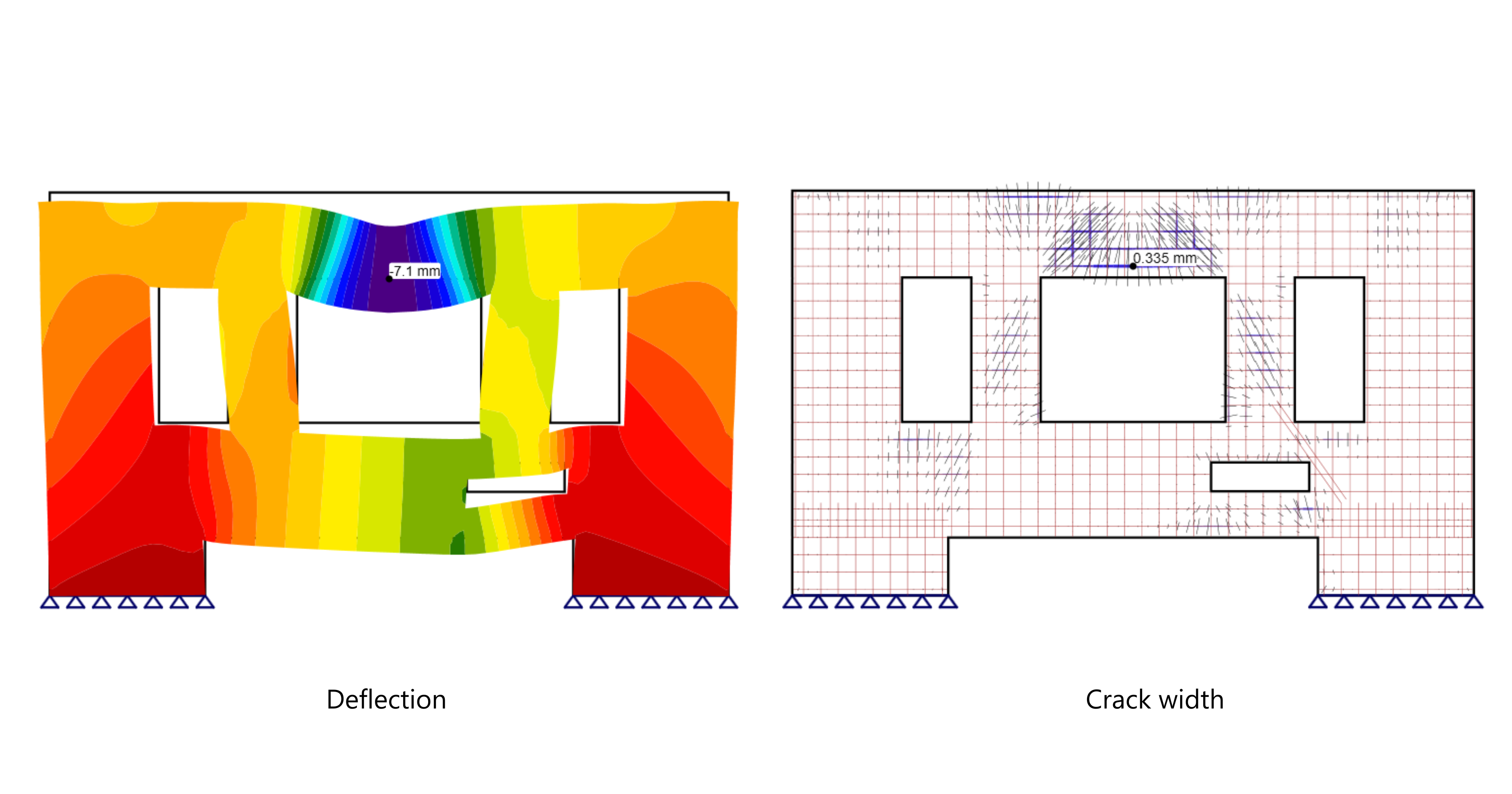
Door gebruik te maken van IDEA StatiCa Detail zijn ingenieurs volledig geïnformeerd over het gedrag van hun wandligger, niet alleen in de UGT, maar ook in de BGT.
Rapport
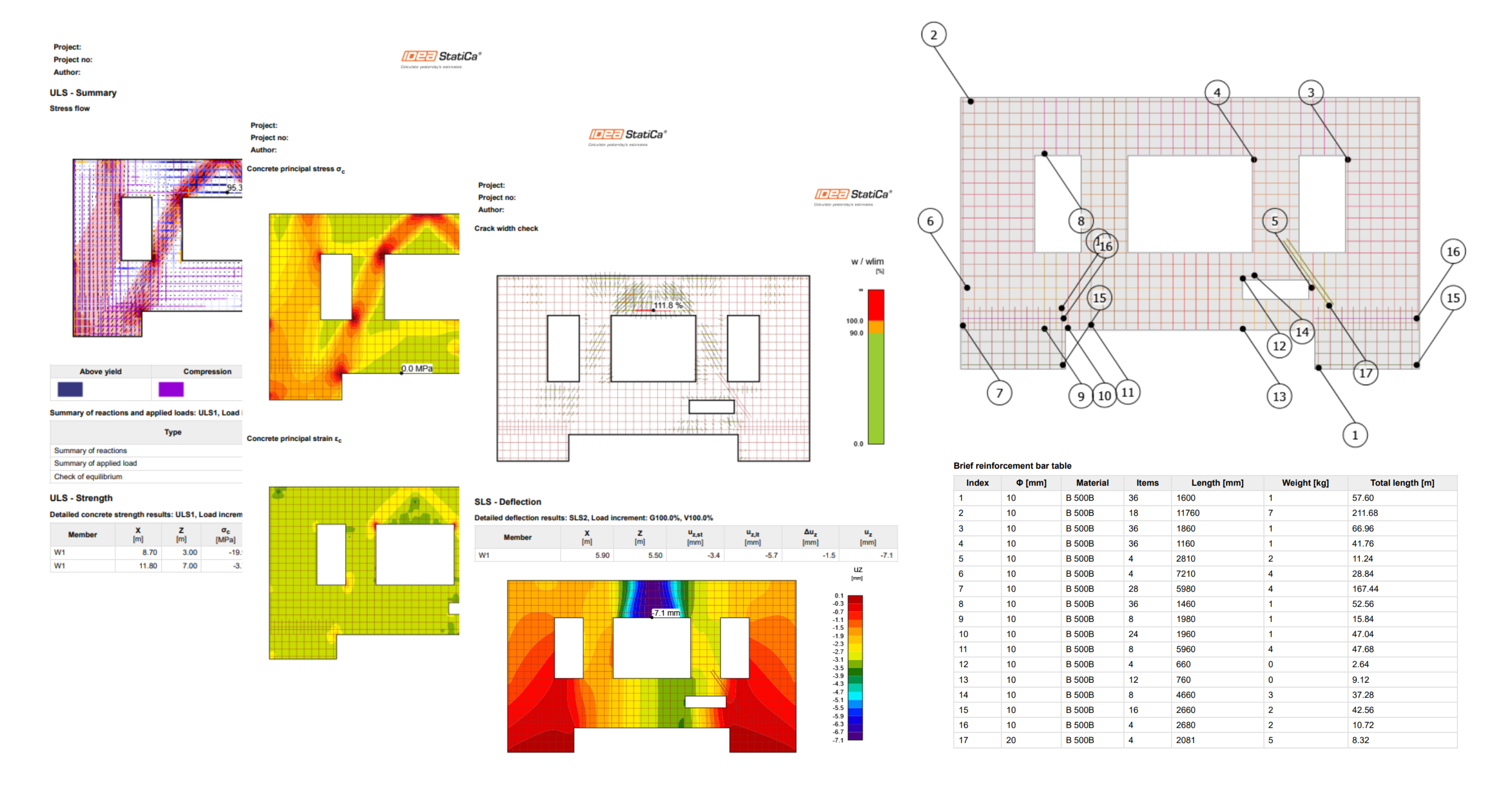
Zodra het ontwerp is afgerond, kunnen ingenieurs een uitgebreid rapport genereren met alle analyseresultaten voor indiening. Daarnaast kan ook een materiaalstaat van de wapening worden gegenereerd voor fabricagedoeleinden.
Conclusie
Het ontwerp van wandliggers vereist zorgvuldige aandacht voor de complexe spanningsinteracties die optreden in D-gebieden. Vereenvoudigde benaderingen of direct gebruik van globale EEM-resultaten kunnen belangrijke effecten zoals compression softening over het hoofd zien, wat leidt tot een overschatting van de betoncapaciteit. Door gebruik te maken van IDEA StatiCa Detail en de op CSFM gebaseerde analyse kunnen ingenieurs deze niet-lineaire gedragingen nauwkeurig in rekening brengen, zodat zowel de UGT- als de BGT-eisen correct worden geverifieerd.
Bronnen
Neem de nieuwste versie van IDEA StatiCa vandaag nog voor een proefrit
Gerelateerde inhoud
ETABS en SAP2000 BIM-koppeling naar Detail
CSFM uitgelegd